







Finishing your GCE Advanced Level examination is an important milestone. For many students, however, the next question can be even more difficult:
“What should I study after A/L?”
There is no single answer that is right for everyone. Your choice may depend on your interests, strengths, career goals, financial situation, preferred learning style and plans for the future.
Some students may want to enter university. Others may prefer a professional qualification, vocational programme, language course or career-focused pathway that allows them to develop practical skills.
The important thing is to avoid choosing a programme simply because it is popular. Instead, think about where you want your education to take you.
Here are seven pathways worth considering after A/L.
1. Improve Your English and Communication Skills
Strong English communication skills can benefit students across almost every career field.
English is widely used in higher education, business, technology, tourism, professional services and international communication. Improving your ability to speak, write, read and understand English can therefore strengthen your options for further study and employment.
An English language programme can be particularly useful if you want to:
-
Communicate more confidently
-
Improve your academic English
-
Prepare for professional environments
-
Develop presentation and communication skills
-
Build a stronger foundation before further study
-
Prepare for an English proficiency examination
You do not have to wait until you start university or a job to improve your English. Building these skills early can give you greater confidence in your next stage of education.
2. Prepare for IELTS and International Opportunities
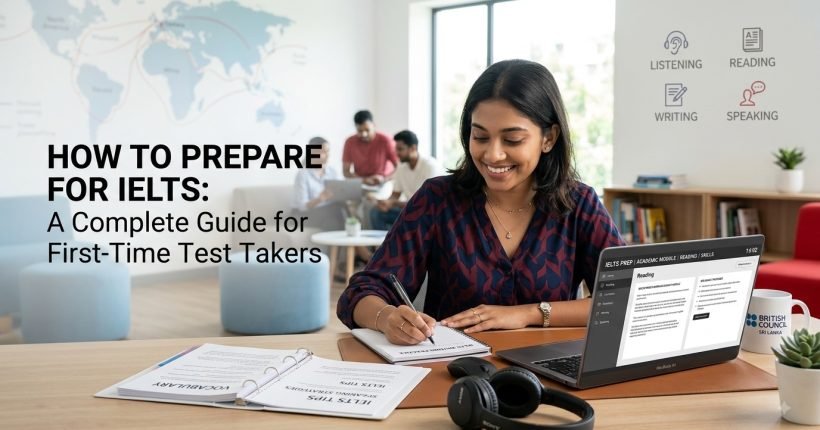
If you are considering studying, working or pursuing opportunities internationally, an English language proficiency test such as IELTS may be an important part of your plans.
IELTS assesses four key skills:
-
Listening
-
Reading
-
Writing
-
Speaking
However, IELTS is not simply about preparing for an examination. The English skills you develop during preparation can also support academic study and professional communication.
Before preparing for IELTS, identify why you need the test and what score you require. Universities, professional organisations, employers and immigration authorities may have different requirements.
If your current English level needs improvement, you may benefit from strengthening your general English first and then progressing to structured IELTS preparation.
3. Choose a Professional Diploma
A professional diploma can be an option for students who want to develop specialised knowledge and practical skills in a particular field.
Depending on your career interests, professional programmes can help you build knowledge that is relevant to employment or further study.
When considering a diploma, look beyond the course title.
Ask:
-
What skills will I develop?
-
Is the qualification recognised?
-
What are the entry requirements?
-
Does the programme include practical learning?
-
What opportunities can it support?
-
Can I progress to a higher qualification afterwards?
A good programme should give you a clear understanding of what you are learning and how it connects to your future goals.
4. Explore NVQ and Vocational Education
Not every student wants a purely academic route. Some learners prefer practical, career-oriented education where they can develop specific occupational skills.
The National Vocational Qualification (NVQ) system provides vocational education and training pathways in Sri Lanka across different fields.
For students interested in technical or practical careers, vocational education can provide an alternative route to developing industry-relevant skills.
For example, students interested in technology may explore ICT-related vocational programmes that provide practical knowledge alongside recognised qualifications.
When considering an NVQ programme, check the qualification level, course content, practical components, entry requirements and possible progression opportunities.
5. Consider ICT and Technology Pathways
Technology continues to influence almost every area of modern life, creating opportunities across many industries.
If you enjoy computers, problem-solving and technology, an ICT-related programme could be worth exploring.
Depending on your interests, you might consider areas such as:
-
Information and communication technology
-
Computer hardware and support
-
Networking
-
Software and digital technologies
-
Data and business technology
-
Digital services
You do not necessarily need to become a software developer to work in technology.
ICT skills can be valuable in education, business, finance, healthcare, government, communication and many other sectors.
The key is to choose a pathway that matches your interests and allows you to develop practical skills.
6. Learn a Foreign Language
English is not the only language that can create new opportunities.
Learning another language can support students interested in international education, tourism, hospitality, customer service, business and global employment opportunities.
Languages such as French and Dutch, for example, can provide opportunities to develop communication skills beyond English and broaden your cultural awareness.
A foreign language can also complement another qualification.
For example:
Professional qualification + English + Foreign language
can create a broader skill set than studying one subject alone.
Language learning is most effective when you practise consistently. Look for programmes that provide opportunities to develop listening, speaking, reading and writing rather than focusing only on memorising vocabulary.
7. Progress Towards Higher Education
For students whose long-term goal is a degree or postgraduate qualification, higher education may be the natural next step after A/L.
Before choosing a programme, consider:
-
The subject area
-
Entry requirements
-
Recognition and accreditation
-
Duration
-
Study mode
-
Costs
-
Career relevance
-
Opportunities for progression
You should also think about whether the qualification supports the career you eventually want to pursue.
If you are not immediately ready to enter a degree programme, a suitable foundation, diploma or professional qualification may provide an alternative pathway towards your longer-term educational goals.
How to Choose the Right Path After A/L
Choosing your next step can feel overwhelming because there are many options.
Start by asking yourself five questions:
1. What do I enjoy?
Your interests matter. You are more likely to stay motivated when you are genuinely interested in what you are learning.
2. What am I good at?
Consider your strengths at school and outside the classroom. Are you good at communication, technology, problem-solving, languages, creative work or working with people?
3. What career interests me?
You do not need to have your entire career planned at 18 or 19. However, having a general direction can help you choose a more suitable qualification.
4. What skills are useful in my chosen field?
Look beyond certificates. Identify the practical skills employers and higher education institutions value.
5. What is my next step after this qualification?
A good learning pathway should not necessarily end when the course finishes.
Ask whether you can progress to another qualification, enter employment, specialise further or use the skills in another educational pathway.
Don’t Choose a Course Just Because It Is Popular
A course that is right for your friend may not be right for you.
Your friend may want to enter technology, while you may be interested in languages, business, teaching, healthcare or another field.
Instead of asking:
“What is everyone else studying?”
ask:
“What skills and qualifications will help me reach my goals?”
This simple change in thinking can help you make a more informed decision.
Build a Combination of Skills
Modern careers often require more than one type of skill.
For example, a student may have technical knowledge but struggle to communicate confidently. Another may have strong English skills but need a professional qualification to enter a particular career.
Combining complementary skills can therefore be valuable.
Consider combinations such as:
ICT + English communication
Professional qualification + IELTS
English + Foreign Language
Technical skills + Communication
Academic qualification + Practical skills
The right combination depends on your career direction.
What If You Still Don’t Know What to Study?
It is completely normal to feel uncertain after A/L.
Instead of rushing into a course, take some time to explore your options.
You can:
-
Speak with teachers or career advisers.
-
Research different career fields.
-
Look at course content carefully.
-
Talk to people working in careers that interest you.
-
Attend education or career guidance events.
-
Compare entry requirements and progression opportunities.
-
Identify skills you need to develop.
Most importantly, remember that your first qualification does not necessarily determine your entire career.
Education is a journey, and your interests and goals may develop as you gain experience.
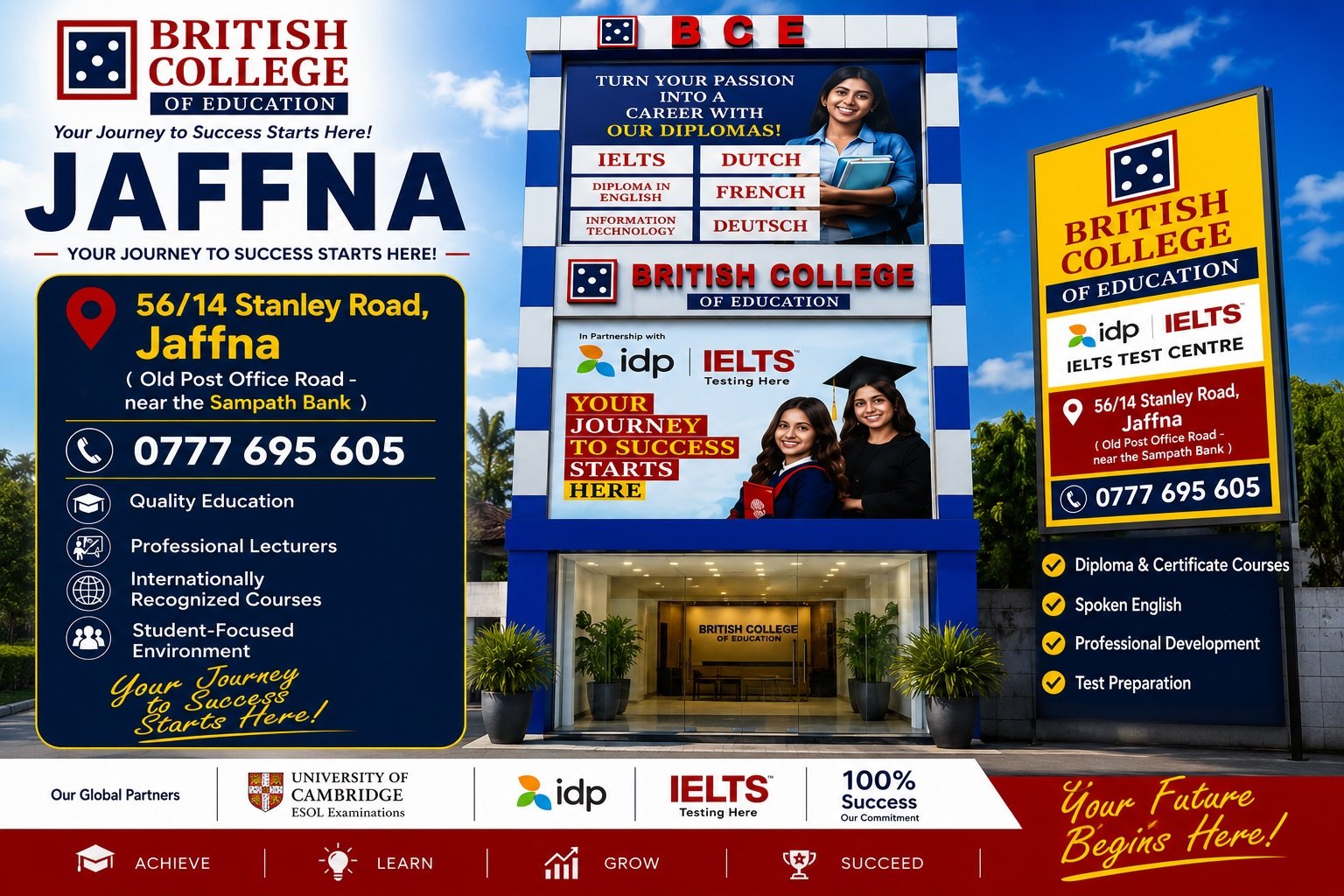
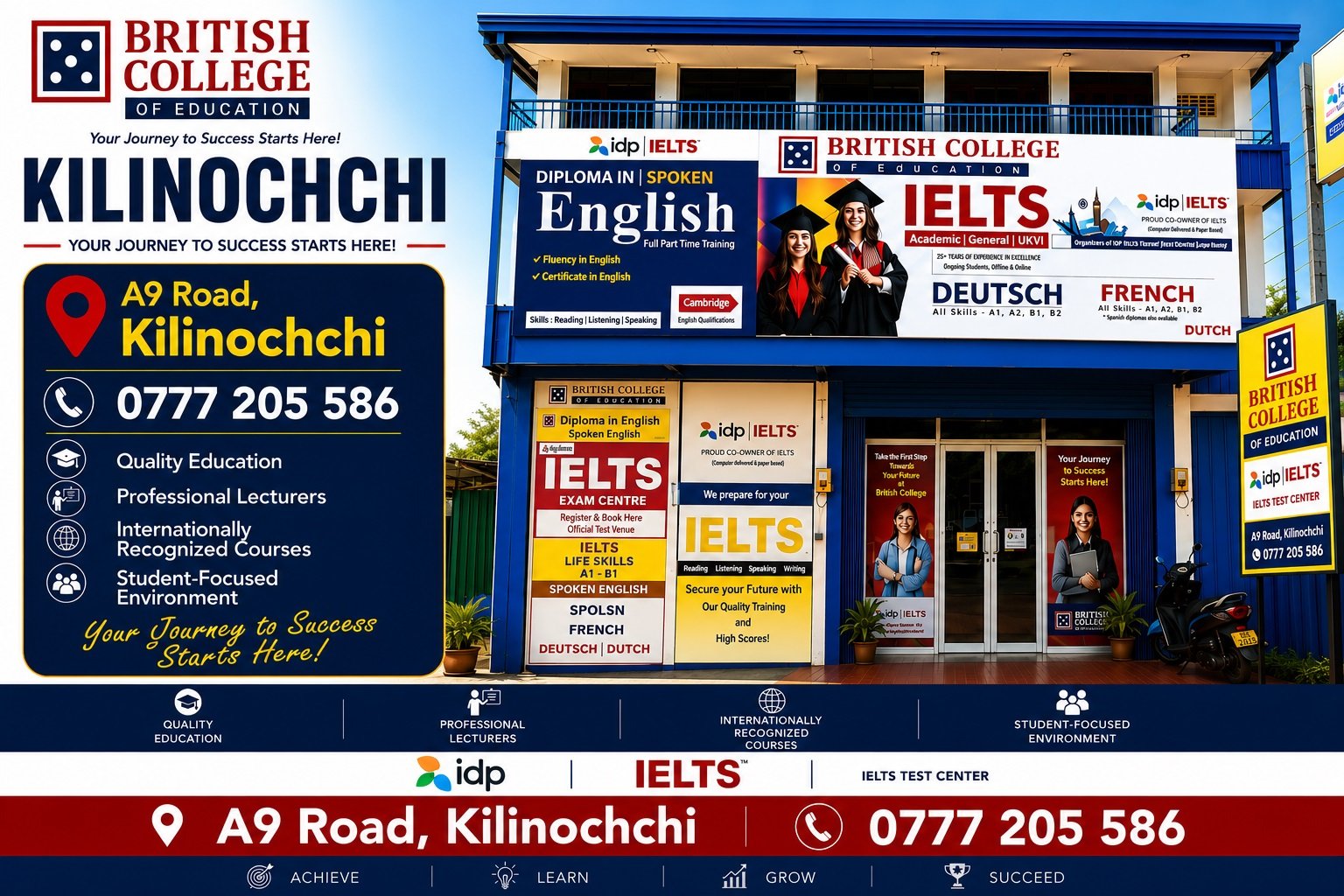
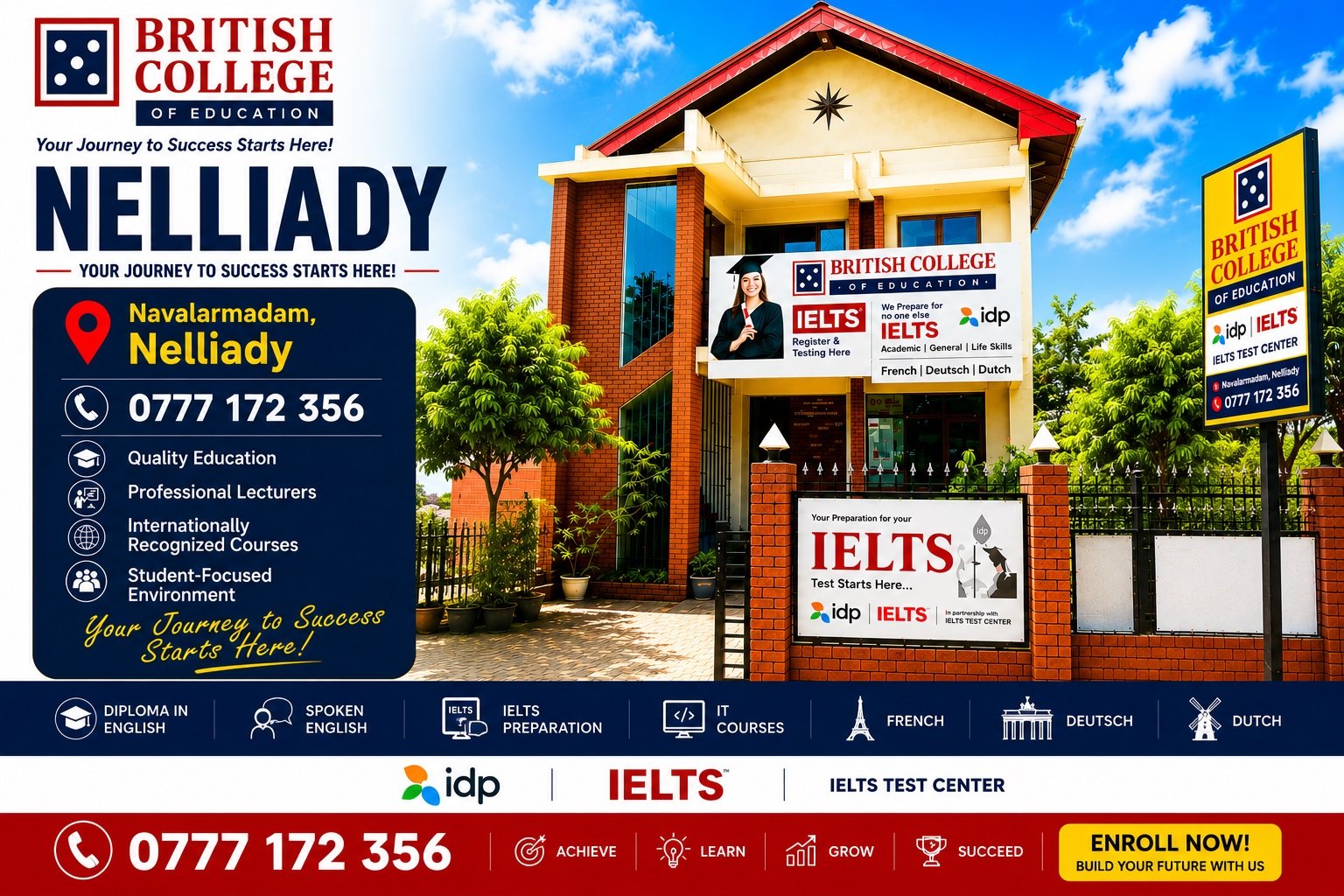
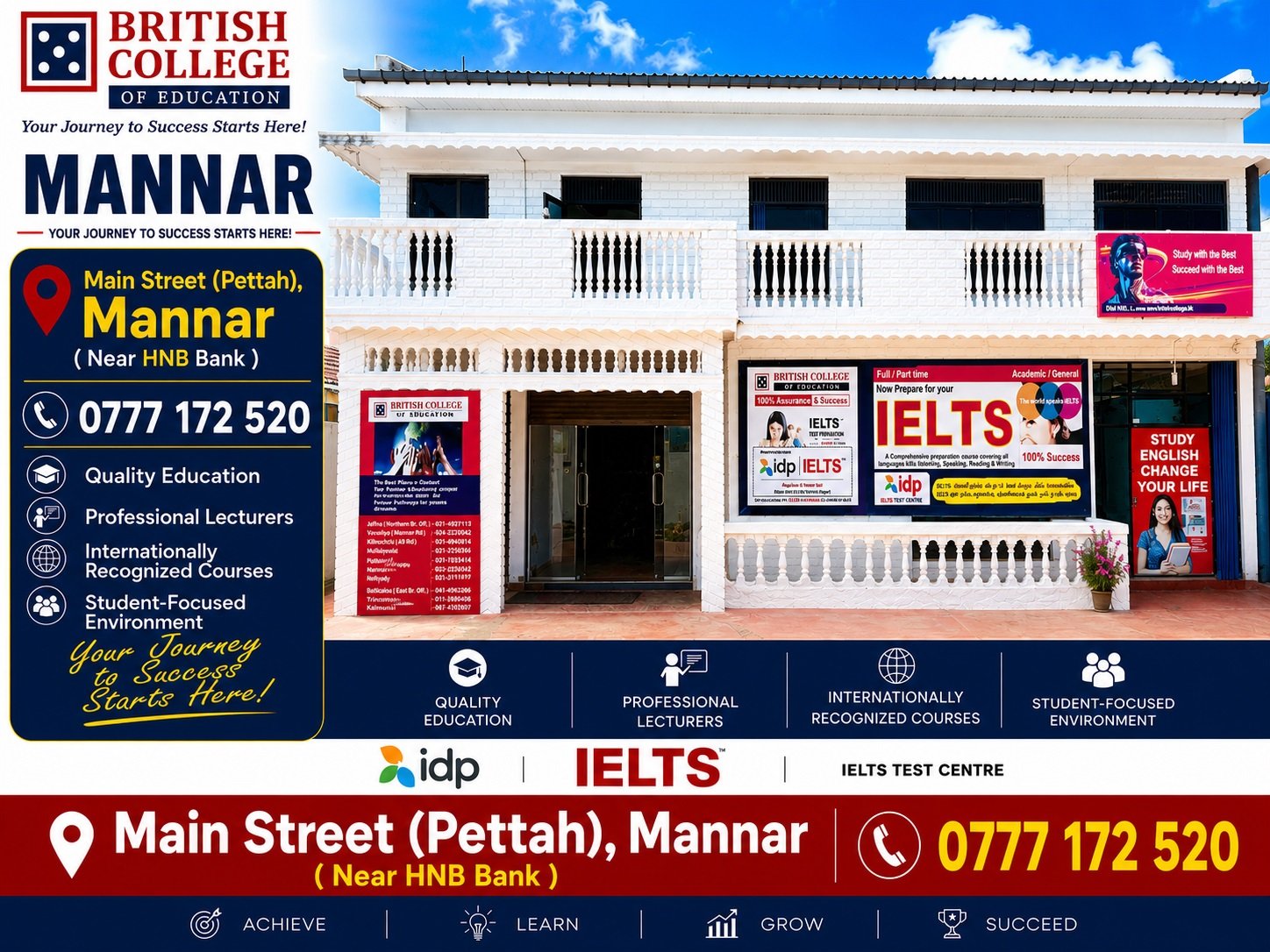
Start Building Your Future with British College of Education
At British College of Education, we believe students should have access to learning pathways that help them move forward with confidence.
Our programmes cover areas including English language, IELTS preparation, foreign languages, professional pathways and vocational education, providing learners with opportunities to develop skills for further education, employment and personal growth.
Whether you are looking to improve your English, prepare for IELTS, learn a foreign language, develop professional skills or explore a vocational pathway, the right programme can be the beginning of your next chapter.
Take time to understand your goals, explore your options and choose a pathway that supports the future you want to build.
Your A/L journey may be ending. Your next journey is just beginning.
Explore Our Programmes →
Frequently Asked Questions
What can I study after A/L in Sri Lanka?
There are many options, including university programmes, professional qualifications, diplomas, vocational education, English and IELTS preparation, foreign languages and other career-focused programmes.
Is university the only option after A/L?
No. University is one pathway, but it is not the only option. Professional qualifications, vocational programmes, diplomas and other forms of further education can also support different career goals.
Is IELTS useful after A/L?
IELTS can be useful if you are planning to study, work or pursue other opportunities where proof of English proficiency is required. The exact requirements depend on the institution or organisation you are applying to.
Is NVQ a good option after A/L?
NVQ programmes can be suitable for students who want to develop practical vocational and occupational skills. Before enrolling, check the specific qualification, entry requirements, course content and progression opportunities.
Should I learn English after A/L?
Strong English communication skills can benefit students in higher education and many professional environments. Improving English can also support preparation for English proficiency examinations such as IELTS.
How do I choose the right course after A/L?
Start with your interests, strengths and career goals. Then compare the course content, entry requirements, recognition, duration, costs, practical components and progression opportunities before making your decision.
What if I am unsure about my career?
You do not need to have your entire career mapped out immediately after A/L. Start by identifying your interests and strengths, explore different fields and seek guidance before committing to a programme.